
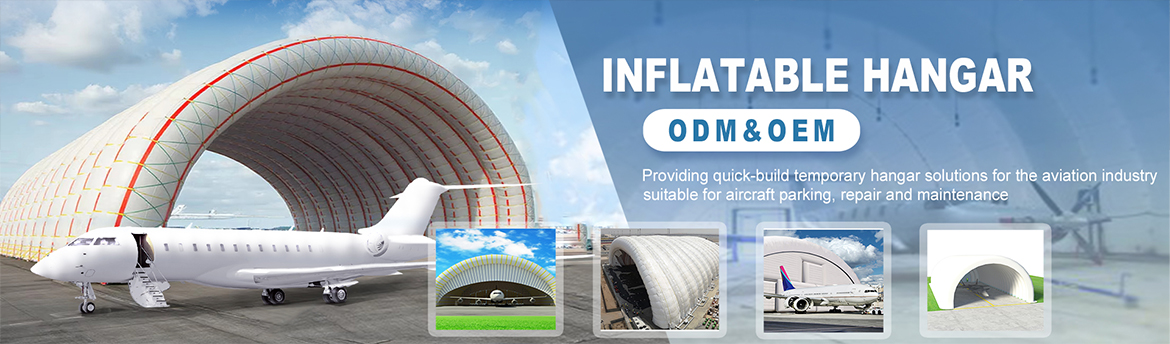
Strategic Analysis: Traditional vs. inflatable aircraft hangar in Future Aviation Support
As strategic advisors in aviation infrastructure, we have conducted an in-depth comparative analysis between traditional rigid structures (reinforced concrete or steel) and modern inflatable hangar. This report specifically evaluates the solutions provided by industry leaders such as Guangzhou Chongqi Industrial Co., Ltd. (Chongqi's).
Inflatable hangars are revolutionizing the aviation, military, and emergency support sectors. By offering rapid deployment capabilities and superior economic efficiency, they effectively address the inherent rigidity and high capital costs associated with traditional infrastructure.

I. Core Value Proposition: A Comparative Overview
The following analysis contrasts key operational dimensions to highlight the strategic edge of inflatable technology.
| Feature Dimension | Traditional Hangars (Rigid/Steel Structure) |
inflatable hangar (Represented by Chongqi's) |
Strategic Advantage |
|---|---|---|---|
| Construction Speed | Extended (Months to Years) | Rapid (Hours to Days) | Rapid Response Capability |
| Capital Expenditure (CAPEX) | High initial investment required | Significantly lower (Fraction of permanent build costs) | Budget Efficiency |
| Foundation Requirements | Complex, permanent groundwork required | Minimal; adaptable to concrete, soil, or sand | Environmental Adaptability |
| Mobility | Fixed / Immovable | Expeditionary; fully demountable and transportable | Operational Mobility |
| Internal Space | Obstructed by beams/columns (Collision risk) | Clear-span (Column-free) design ensures safety | Space Optimization & Safety |
| Core Materials | Steel, concrete, aluminum frames | High-strength PVC/TPU coated fabrics | Lightweight Durability |
| Maintenance | Costly; requires rust prevention & structural checks | Low maintenance; simple on-site repair | Low O&M Costs |
II. Technical Superiority and Operational Challenges
Inflatable hangars, particularly those engineered by Chongqi's (a leading supplier in the Chinese market), demonstrate technical versatility that traditional structures cannot match in time-sensitive scenarios. This is particularly evident in military logistics, emergency response, and MRO (Maintenance, Repair, and Overhaul) operations.
1. Structural Integrity & Durability
Modern inflatable hangars are far from being simple "tents." They are sophisticated engineering marvels designed for longevity:
- Advanced Materials: Utilizing high-modulus polyethylene fibers, these structures offer a lifespan of up to 20 years with waterproof, UV-resistant, and fire-retardant properties.
- Extreme Weather Resistance: Engineered to withstand wind loads up to 120 km/h and snow loads of 25-75 kg/m². The continuous internal pressure actively resists structural deformation during blizzards or gales.
- Redundant Safety Design: The modular "Air Rib" structure consists of independent airtight tubes. If one section is compromised, the remaining tubes maintain structural integrity, ensuring personnel and asset safety.
2. Smart Operations & Efficiency
Integration of intelligent management systems reduces both operational risk and carbon footprint:
- Automated Pressure Control: Sensors monitor internal pressure in real-time, automatically activating inflation only when necessary to maintain structural rigidity, eliminating the need for manual oversight.
- Energy Efficiency: Variable frequency motors reduce power consumption. Furthermore, light-transmitting outer membranes utilize natural daylight, virtually eliminating the need for artificial lighting during daytime operations.
- Remote IoT Monitoring: System status can be monitored and managed remotely via mobile applications.
3. Operational Considerations
While advantageous, strategic planners must consider specific limitations:
- Severe Weather Protocols: While robust, preemptive deflation or reinforcement is recommended during catastrophic weather events (e.g., Category 5 hurricanes).
- Customization for Wide-Body Aircraft: Standard models may not fit ultra-large aircraft (e.g., A380). Custom designs (up to 100m width) are required.
- Cost of Customization: Advanced features (HVAC integration, specific sensing systems) and large-scale customization will increase the base cost.
III. Strategic Positioning and Market Application
Traditional and inflatable hangars serve distinct, yet complementary, strategic functions in the aviation ecosystem:
- Permanent Infrastructure (Traditional): Best suited for major airport hubs requiring long-term, high-frequency throughput where immovable assets are preferred.
- Expeditionary & Flexible Support (Inflatable): The optimal choice for high-value, variable scenarios:
- Military Field Operations: Provides immediate, climate-controlled maintenance shelters for frontline assets.
- Commercial MRO & AOG Support: Allows MRO providers to rapidly expand capacity or service Aircraft on Ground (AOG) situations without waiting for construction permits.
- Disaster Relief: Instantly functions as mobile field hospitals or logistics warehouses.
Strategic Conclusion
inflatable hangar represent the indispensable "Rapid, Flexible, and Economic" pillar of modern aviation logistics. They are not intended to replace permanent heavy infrastructure entirely but serve as a critical complement. For projects demanding immediate deployment capabilities and ROI efficiency, inflatable solutions hold an absolute strategic advantage.
Next Steps: Join Chongqi's and Embark on a Partnership Journey
We look forward to collaborating with you to bring Chongqi's innovative inflatable hangars to global airlines, aircraft maintenance companies, and other markets. Contact us for product catalogues, agent agreement details, and market support plans:
Let us seize the growth opportunities in the global aviation market and create a win-win future! We await your response to co-author a new chapter in inflatable buildings.
Yours sincerely.
E-mail: sales@china-inflatables.com chongqi@china-inflatables.com