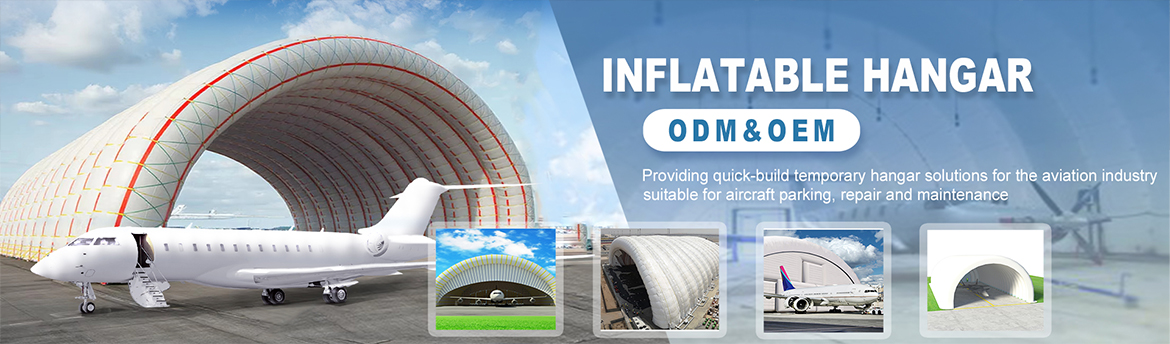
Custom Inflatable Hangar Your Trusted Buildings Solution




By Chongqi's, Economic Columnist
In the ever-evolving landscape of global aviation, one often-overlooked segment is quietly taking flight: the market for large-scale hangars, aircraft shelters, and inflatable hangars. These structures, essential for housing and maintaining aircraft, are becoming increasingly vital as the aviation industry expands. From commercial airlines to military operations, the demand for innovative, cost-effective, and flexible solutions is soaring. But what is driving this growth, and what does it mean for the broader economy?
Inflatable hangars, once a niche solution, are now at the forefront of aviation infrastructure innovation. Companies like Buildair have pioneered the development of these structures, offering a flexible alternative to traditional brick-and-mortar hangars. Buildair's inflatable hangars, for instance, can be deployed rapidly and are particularly useful in remote or temporary locations. In 2018, Buildair constructed the world's largest inflatable hangar in Jeddah, Saudi Arabia, capable of housing wide-body aircraft like the Boeing 787 or Airbus A330. The company has even announced plans for an even larger structure to accommodate the Airbus A380, the world's largest passenger airliner.
The appeal of inflatable hangars lies in their versatility and cost-effectiveness. Unlike traditional hangars, which can take months or even years to build, inflatable structures can be erected in a matter of days. This speed is crucial for military operations, disaster relief efforts, or temporary maintenance facilities. Moreover, their portability allows for easy relocation, a feature that traditional hangars simply cannot match. As the global aviation market continues to grow—projected to reach $1.5 trillion by 2030—the demand for such flexible solutions is expected to rise.
The economic impact of this burgeoning market is multifaceted. First, the construction and maintenance of large-scale hangars contribute significantly to job creation. Skilled labor is required not only for the initial construction but also for ongoing maintenance and operations. In regions with major aviation hubs, such as the Middle East and Asia-Pacific, this translates into thousands of jobs and substantial economic activity.
Second, the shift towards inflatable and modular hangars represents a broader trend in infrastructure development: the move towards cost-efficient, sustainable solutions. Traditional hangars, often made of steel or concrete, require significant resources and time to build. In contrast, inflatable hangars use advanced materials like PVC-coated fabrics, which are not only cheaper but also more environmentally friendly. This aligns with the global push towards greener infrastructure, a market expected to grow by 10% annually over the next decade.
However, challenges remain. The initial cost of high-quality materials for inflatable hangars can be prohibitive for some operators, and technical issues such as ensuring structural integrity in extreme weather conditions persist. Yet, as technology advances and economies of scale come into play, these barriers are likely to diminish.
Several companies are leading the charge in this space. J.B. Roche, for example, has been a pioneer in inflatable aircraft shelters since 1999. Their IglooMX® shelters are trusted by major airlines and military organizations for their durability and rapid deployment capabilities. Another key player, Big Top Fabric Structures, offers fabric hangars that are not only cost-effective but also energy-efficient, thanks to their translucent roofs that reduce the need for artificial lighting.
Innovation is also coming from unexpected quarters. The U.S. military, for instance, has been experimenting with portable shelters for aircraft maintenance in expeditionary settings. These shelters, often made of lightweight aluminum or fabric membranes, can be deployed quickly and are designed to withstand harsh conditions. As geopolitical tensions rise and the need for rapid military deployment increases, such innovations are likely to see greater adoption.
Looking ahead, the market for large-scale hangars and aircraft shelters is poised for significant growth. According to industry reports, the global inflatable aircraft hangar market is expected to expand at a compound annual growth rate (CAGR) of 4.5% from 2023 to 2030. This growth will be driven by several factors: the increasing number of aircraft in service, the expansion of airports in emerging markets, and the need for more efficient maintenance facilities.
Inflatable hangars, in particular, are set to play a pivotal role. Their ability to be customized for specific aircraft types, coupled with their lower environmental footprint, makes them an attractive option for both commercial and military applications. As the aviation industry continues to grapple with challenges like climate change and cost pressures, these innovative structures may well become the gold standard in aircraft housing.
In conclusion, the rise of large-scale hangars, aircraft shelters, and inflatable hangars is more than just a trend—it's a reflection of the aviation industry's need for agility, efficiency, and sustainability. As this market continues to evolve, it will undoubtedly shape the future of global aviation infrastructure, offering economic opportunities and challenges in equal measure.
We believe that partnering with you will revolutionise the global market for inflatable hangars in airlines, aircraft maintenance, and beyond. As our agent, you will:
We propose starting with a pilot project, such as deploying inflatable hangars at airline bases, small airports, or maintenance centres, to demonstrate reliability and flexibility, attracting more clients.
Hangares Inflables de Chongqi: Soluciones Innovadoras para la Aviación en Sudamérica
We look forward to collaborating with you to bring Chongqi's innovative inflatable hangars to global airlines, aircraft maintenance companies, and other markets. Contact us for product catalogues, agent agreement details, and market support plans:
Let us seize the growth opportunities in the global aviation market and create a win-win future! We await your response to co-author a new chapter in inflatable buildings.
Yours sincerely.
E-mail: sales@china-inflatables.com chongqi@china-inflatables.com