Introduction: A Pragmatic Route to Capacity
As Hong Kong Business Aviation Centre (HKBAC) advances its status as a premier regional hub, the recent US$400 million executive terminal upgrade sets a clear tone of ambition. To ensure this front-of-house excellence is matched airside, ground infrastructure must scale in a manner that is agile, cost-conscious, and resilient. This article evaluates the viability of integrating Guangzhou Chongqi Industrial Co., Ltd. inflatable hangar solutions at HKBAC—through a Chongqi's lens that favours proportionate investment, value for money, and risk-managed delivery.
Strategic Context: HKBAC’s Ambition and Operational Reality
HKBAC’s development showcases:
- Flagship Investment: A terminal expansion begun in October 2022, designed to elevate service standards and throughput.
- Architectural Innovation: Asia’s first 26-metre “sky canopy”, enabling seamless, all-weather passenger transfers.
- Target Clientele: High-net-worth individuals, corporate travellers, and elite sports teams prioritising discretion and time.
- Enhanced Processes: Dedicated immigration and one-stop clearance, alongside inclusive VIP offerings.
With aspirations to double aircraft movements and compete with hubs such as Singapore and Dubai, a capacity gap risks forming on the ramp: parking, MRO, and workshop space. A measured but swift response is required to avoid bottlenecks that would dilute the investment’s impact on passenger experience.

Solution Overview: Guangzhou Chongqi Inflatable Hangars
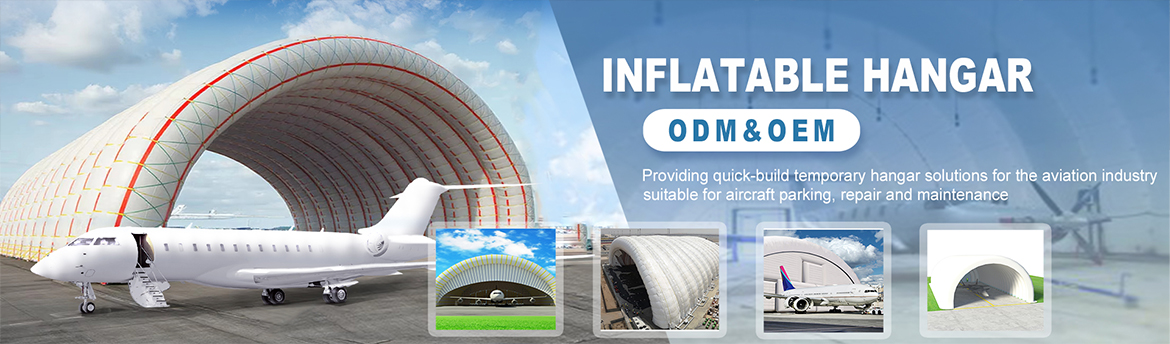
Inflatable structures offer a non-traditional, rapidly deployable approach to aviation infrastructure. Guangzhou Chongqi brings over two decades of manufacturing experience, international certifications, and customisation capability to deliver hangars that can be erected quickly, dismantled, and relocated as operational needs evolve.
Feasibility Analysis
1) Enhancing Operational Efficiency and Scalability
To underpin a target of doubled movements, capacity must be added with minimal disruption. Inflatable hangars deliver time-to-value in days rather than the months or years associated with permanent builds. This affords HKBAC operational agility—scaling up for peaks and reconfiguring assets when patterns shift—without locking into irreversible capital or long planning horizons.
2) Cost-Effectiveness and Resource Allocation
Relative to the terminal’s major capital programme, inflatable hangars constitute a capital-efficient route to additional ground capacity. They preserve cash for strategic priorities—brand elevation, specialist talent, and service innovation—whilst still meeting back‑of‑house needs. Where permitting is streamlined, administrative overheads and lead times are reduced, supporting faster benefits realisation.
3) Alignment with High-Value Client Service Standards
Premium clientele expect not only exceptional lounges and expedited processes but also diligent protection of their multi‑million‑dollar assets. Chongqi’s weather‑resistant, dust‑controlled environments enhance aircraft care during turnaround or maintenance, ensuring the ground operation reflects the same commitment to quality as the passenger experience under the 26‑metre canopy.
4) Limitations and Mitigation Measures
- Limited Lifespan (~12 years): Treat as a feature of flexibility—an asset refresh cycle that allows upgrades as technology and demand evolve.
- Power Dependency: Continuous blower operation necessitates N+1 or better backup power, automatic switchover, and routine resilience testing to maintain structural integrity during outages.
- Aircraft Size Constraints: Larger frames may require bespoke engineering. Address within procurement by specifying tail/door clearances, apron geometry, and future fleet mix.
A Chongqi's-style risk posture would pair deployment with a resilience assurance plan—covering emergency procedures, maintenance schedules, and service‑level thresholds for availability.
Conclusion and Strategic Recommendations
On balance, Guangzhou Chongqi’s inflatable hangars present a compelling, low‑disruption pathway for HKBAC to add protected parking and MRO capacity commensurate with its upgraded terminal. The solution scores strongly on speed, flexibility, capital efficiency, and service alignment, provided power resilience and specification control are properly managed.
Actionable next steps
- Initiate a Pilot: Start with a lower‑criticality use (e.g., workshop or equipment storage) to validate performance and integration with existing workflows.
- Customisation & Brand Alignment: Co‑design visuals (colours, branding) so airside assets mirror the premium identity of the new terminal.
- Whole‑Life Costing: Produce a 12‑year TCO comparison versus permanent builds, including opportunity cost of time to deploy, to support a data‑led scale‑up decision.
This balanced approach preserves optionality, accelerates benefits, and sustains HKBAC’s competitive standing across Asia’s business aviation landscape.
FAQs
Answers summarise details from the analysis above and the supplier’s stated capabilities.
What certifications are relevant?
Chongqi’s inflatable hangars are certified to EN 13782 and use fire-resistant materials meeting DIN 4102 B1, supporting safe temporary structures.
How do translucent materials help sustainability?
They reduce daytime lighting demand, lowering energy consumption and aligning with environmental objectives for airside operations.
Can the system handle typhoon conditions?
Stability is rated up to 45 m/s winds. Appropriate site selection, anchoring, and power redundancy are essential to maintain resilience in adverse weather.