European Inflatable Hangar Market — Demand Outlook and Go-to-Market
world deployment experience and the prior discussion of advantages, costs, and use cases.
Executive summary
Inflatable hangars have moved from niche to sensible mainstream for European operators who need covered space quickly, without the pain of major civils. The proposition is straightforward:
Faster to deploy and redeploy than fixed structures
Lower total cost of ownership for short‑to‑medium horizons
Flexible, compliant solutions for varied climates and sites
Demand in Europe is sustained by five drivers: (1) maintenance capacity pinch‑points across regional airports, (2) defence rearmament and dispersed basing, (3) UAV/eVTOL growth and test activity, (4) resilience planning for extreme weather, and (5) budget discipline pushing “capex‑light” options. The near‑term opportunity concentrates in the UK, Nordics, Benelux, Germany, Italy, Spain, France, Poland, and the Baltics.
On balance, success in this market is less about exotic technology and more about credible compliance, tidy installations, dependable aftercare, and honest TCO math. Agents who already sell into airports, MROs, defence, blue‑light services, and offshore O&M are best placed.
What we mean by “Aircraft hangar”
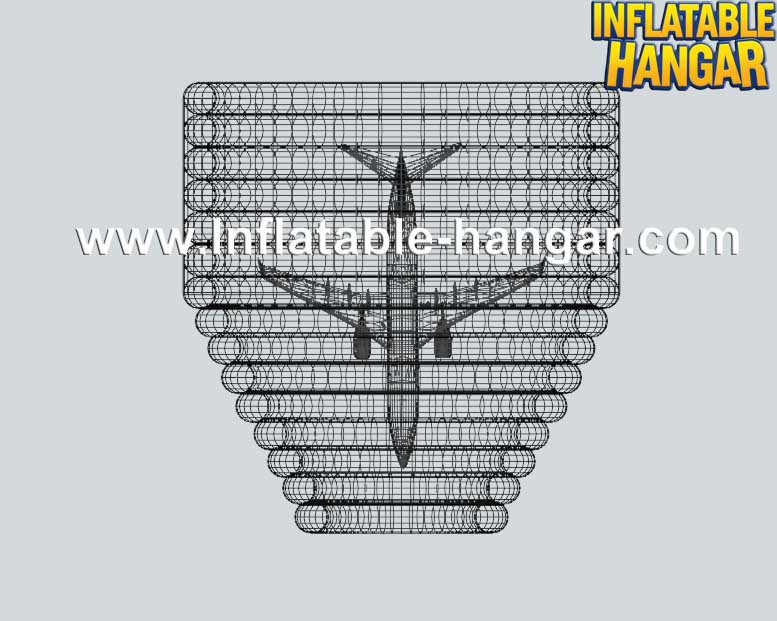
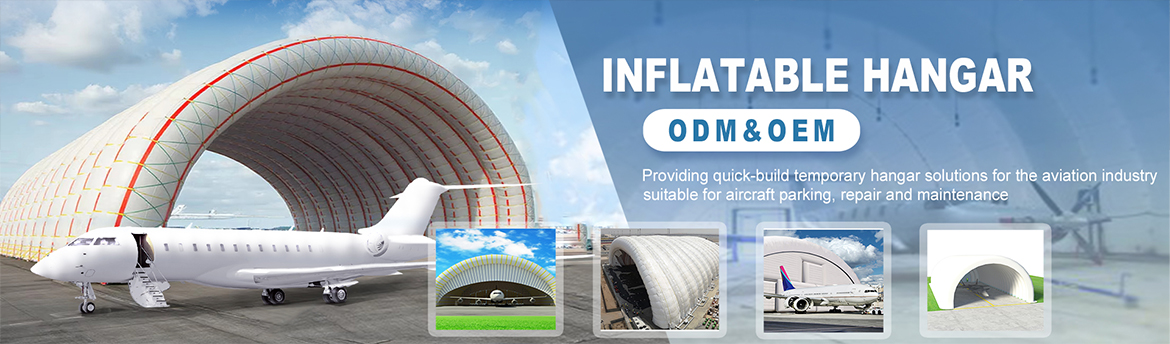
Rapid‑deploy, air‑supported or frame‑reinforced membrane structures
Engineered for aviation use: door clearances for rotor/wing and tail height, integration of lighting, power, HVAC, dehumidification, and fire safety
Anchored by ground stakes, ballast, or perimeter beams; minimal or no permanent foundations
From earlier points: they are quick to set up, easier on civils, energy‑manageable with proper insulation and HVAC, and versatile across aircraft sizes and climates.
Why demand is rising in Europe
Capacity and continuity
Regional MROs face seasonal spikes; airlines seek short‑term covered space to avoid AOG delays.
Defence and security
Dispersed operations, rapid mobility, and camouflage/cover needs have increased across NATO members.
UAV and eVTOL ecosystems
Test centres, vertiports‑in‑waiting, and public‑safety drone units need scalable, lower‑commitment shelters.
Weather and resilience
Wind, snow, heat, and salt exposure are not academic: operators want dry, temperature‑stable workspaces that can be moved or reconfigured as needs change.
Budget pragmatism
Temporary or modular solutions help airports and operators align spend with uncertain traffic and project timelines.
Where demand concentrates (by use case)
Line maintenance and light checks at secondary airports
Helicopter EMS, police, and SAR bases needing localised cover close to where missions start
Military and government fleets seeking mobile shelters, including for exercises and forward locations
Offshore wind and energy: coastal bases with salt‑laden air and frequent relocations
UAV R&D and fleet operations requiring clean, conditioned space with frequent door cycles
Transitional cover during refurbishment of fixed hangars
Engine/parts workshops and segregated processes (e.g., composite repair, paint prep)
A simple persona view:
Airport operator: wants minimal interruption, clean interfaces to power/fire systems, and tidy perimeters
MRO manager: cares about door geometry, crane/gantry points, lighting, and FOD control
Defence buyer: focuses on rapid deployment, wind/snow performance, blackout/EMI considerations, and transportability
UAV lead: prioritises frequent access, low turbulence inside the structure, and battery thermal management
European compliance and standards (what buyers will ask)
Structural loads: Eurocodes, notably EN 1991 for wind and snow actions; site‑specific anchoring calculations
Temporary structures safety: EN 13782 (tents — safety), plus national supplements
Fire behaviour: EN 13501‑1 classification (seek B‑s1, d0 or better for membranes where feasible)
Electrical and HVAC: CE‑marked equipment; documentation for conformity and safe isolation
Environmental: REACH/RoHS for materials and electricals; noise considerations
Documentation pack that reassures: Calculations, method statements, inspection and maintenance schedules, wind action management plan, and a clear dismantling procedure.
A British buyer will expect a competent RAMS pack, clean drawings, and someone on the hook for aftercare. No drama.
Costs and TCO (what matters in practice)
From the earlier breakdown:
Deployment cost components: engineering, membranes and blowers, site prep and anchoring, logistics, install/commissioning, insurance
Operating cost drivers: HVAC and dehumidification, continuous or standby blowers, lighting, planned membrane maintenance, door/zip systems, site security and compliance
Practical ways to keep TCO in check
Specify insulation and dehumidification to the actual task (storage versus maintenance)
Choose door systems matched to door‑open dwell time; reduce conditioned air loss
Use modular spans so capacity can scale without re‑buying everything
In cold or coastal areas, invest up‑front in coatings and hardware that resist corrosion; it’s cheaper than early replacement
A simple sanity check buyers like: Compare “cost per covered aircraft‑day” over 3–5 years vs. renting fixed hangar time or flying to distant MROs. Inflatable solutions often win once avoided downtime and towing/positioning costs are included.
Competitive landscape (categories rather than name‑checks)
Global fabric‑structure OEMs with aviation options
Specialists in inflatable/air‑supported enclosures
Regional installers/resellers focused on sports/industry now entering aviation
Rental providers for events/industrial who can pivot to aviation with the right specs
Differentiation that sticks: aviation‑grade doors and clearances, credible wind/snow design certificates, quick‑response service, and neat site execution.
Route to market in Europe (agent‑led)
What a good agent looks like
Existing relationships with airports, MROs, defence procurement, blue‑light aviation, offshore O&M, or UAV hubs
Comfort with technical sales: reading load tables, discussing HVAC duty, and explaining anchoring options without over‑promising
Project discipline: RAMS, permits, site coordination, and a tidy handover
Commercial model options
Territory‑based exclusive with quarterly pipeline reviews
Project‑by‑project collaboration where the agent brings the site and we handle design/engineering
Reference photos and short case notes showing before/after timelines and crew sizes
Spares and patch kits stocked locally; SLA for emergency call‑outs
Risks and mitigations
Permitting surprises: pre‑check local interpretation of “temporary” and apron safety rules; keep a tidy compliance dossier
Weather exceedance: define operational wind thresholds and temporary lowering/evacuation procedures; train site teams
Energy costs: specify insulation, heat recovery, and duty‑matched HVAC; use zoned conditioning
Membrane wear: plan inspections; keep patch materials on site; design for replaceable high‑wear strips
Programme slip: insist on early site surveys and obstacle checks; pre‑agree laydown areas and crane access if needed
12‑month action plan (pragmatic and sequenced)
Month 0–2: Appoint 4–6 anchor agents (UK/Ireland, Nordics, DACH, Benelux, France, Italy/Spain, CEE). Train on specification and compliance.
Month 1–3: Build a quote kit: load tables by span, HVAC sizing guide, door selection matrix, anchoring playbook, and a TCO calculator.
Month 2–5: Secure pilot installs: one airport MRO, one helicopter EMS base, one defence exercise site, one UAV test centre. Capture photography and metrics (install hours, energy draw).
Month 3–6: Local stock of spares and two rental/demo units per region. Publish RAMS and compliance packs in local languages.
Month 6–12: Channel marketing: webinars with airport ops and MRO managers; joint stands at inter‑airport‑style events; targeted outreach to offshore wind O&M.
Ongoing: Quarterly reviews of wind/snow designs and country‑specific permitting notes; keep case studies honest and specific.
Appendix A — Advantages at a glance (from prior discussion)
Rapid deployment and removal; minimal civils
Lower total cost of ownership for temporary to mid‑term needs
Flexible dooring and clearances; integrates lighting, power, HVAC, fire systems
Strong climate adaptability with proper membrane and anchoring
Smaller site footprint and reduced operational disruption during install
Sustainability: reflective membranes, lower embodied carbon than heavy steel (usage‑dependent)
Appendix B — Typical use cases (from prior discussion)
Line maintenance, light checks, and seasonal capacity
EMS/police/SAR helicopter bases
Defence dispersed basing and exercises
UAV/eVTOL operations and testing
Engine/parts workshops and segregated process bays
Temporary cover during fixed‑hangar refurbishment
Coastal/offshore wind O&M bases
Bring rapid‑deploy hangars to your clients — we’ll back you with engineering, you keep the relationship.
If you sell into airports, MROs, defence or UAVs, our Inflatable aircraft hangar add margin without new overheads.
Faster installs, fewer headaches: become our agent and deliver cover where it’s needed, when it’s needed.
Aviation‑grade, field‑proven, and tidy on site — the kind of kit your customers will thank you for.
Add a resilient, capex‑light option to your portfolio and win projects traditional sheds can’t touch.
We handle the calculations and compliance; you bring the opportunities and local know‑how.
Stockable spares, quick call‑outs, honest SLAs — make reliability your selling point.
From helipads to UAV hubs: one versatile solution, multiple revenue streams for your territory.
Install in days, not months — close deals on timelines competitors can’t match.
Join a European network of agents building practical, profitable solutions for real‑world aviation.
Next Steps: Join Chongqi and Embark on a Partnership Journey
We look forward to collaborating with you to bring Chongqi's innovative inflatable hangars to global airlines, aircraft maintenance companies, and other markets. Contact us for product catalogues, agent agreement details, and market support plans:
Email: (Insert official email)
Phone: (Insert official phone)
Website: (Insert official website)
Let us seize the growth opportunities in the global aviation market and create a win-win future! We await your response to co-author a new chapter in inflatable buildings.
Yours sincerely.